
Home Decor
Creating a Room That Feels Like Home
I've walked into rooms that were beautifully decorated — every piece carefully chosen, every surface perfectly styled — and felt nothing. And I've walked into rooms that were a little worn, a little mismatched, and felt immediately at ease. The difference isn't design. It's something harder to name. It's the feeling that someone actually lives here. That this room was made for comfort, not for admiration.
Creating a room that feels like home is one of the things I think about most. Not a room that photographs well, though that's a nice bonus. A room that makes you want to sink in and stay.
Comfort Is the Foundation
Before anything else, a room needs to be physically comfortable. The sofa needs to be soft enough to actually sit in. The lighting needs to be warm enough to relax under. The rug needs to feel good underfoot. These aren't decorating details — they're the foundation. If a room isn't comfortable, no amount of beautiful styling will make it feel like home.
I always start with seating and lighting when I'm thinking about a room. Is there a place to sit that invites you to stay? Is the lighting warm and layered — a mix of overhead, table, and floor lamps — rather than harsh and flat? These two things alone can transform a room's feeling.
Texture Does the Heavy Lifting
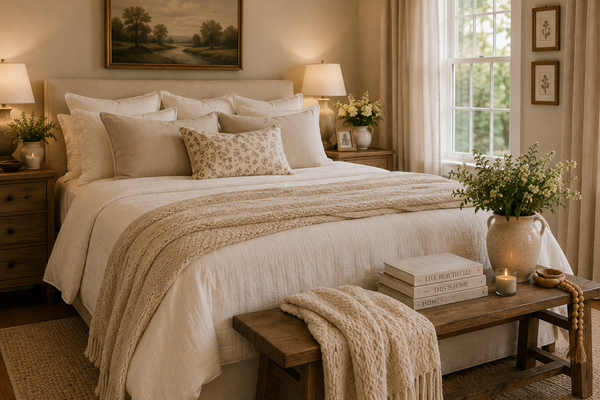
In a room with good bones, texture is what creates warmth. A linen sofa. A wool throw. A jute rug. A wooden coffee table with a natural grain. A ceramic lamp base. These materials have a quality that synthetic ones don't — they age beautifully, they feel good to touch, and they bring a sense of the natural world into your home.
I try to layer at least three or four different textures in any room I'm styling. Smooth and rough. Soft and hard. Matte and slightly shiny. The contrast is what makes a room feel rich and considered, even when the individual pieces are simple.
Let the Room Tell Your Story
The rooms I love most are the ones that tell you something about the person who lives there. A shelf of well-loved books. A piece of art that means something. A collection of objects gathered over years of travel or memory. These personal touches are what separate a decorated room from a lived-in one.
I'm not suggesting you display everything you own. Editing is important. But within that edit, make sure there's room for the things that are genuinely yours — not just the things that look right, but the things that feel right. A room without any personal history feels like a hotel. A room with too much feels cluttered. The sweet spot is somewhere in between: curated, but honest.
The Details That Make You Pause
Some of my favorite things in my home are small. A ceramic bowl on the coffee table that I've had for years. A framed photograph on the nightstand. A small plant on the windowsill that I water every Sunday. These details don't show up in design magazines, but they're the things that make a room feel genuinely inhabited.
A room that feels like home isn't finished all at once. It accumulates over time, through the slow gathering of things you love and the gradual editing of things you don't. It's a living thing, always a little in progress. And that, I think, is exactly as it should be.